Why Every Child Deserves a Personalized Learning and Nutrition Journey
Moving beyond the one-size-fits-all approach to unlock every child’s true potential.
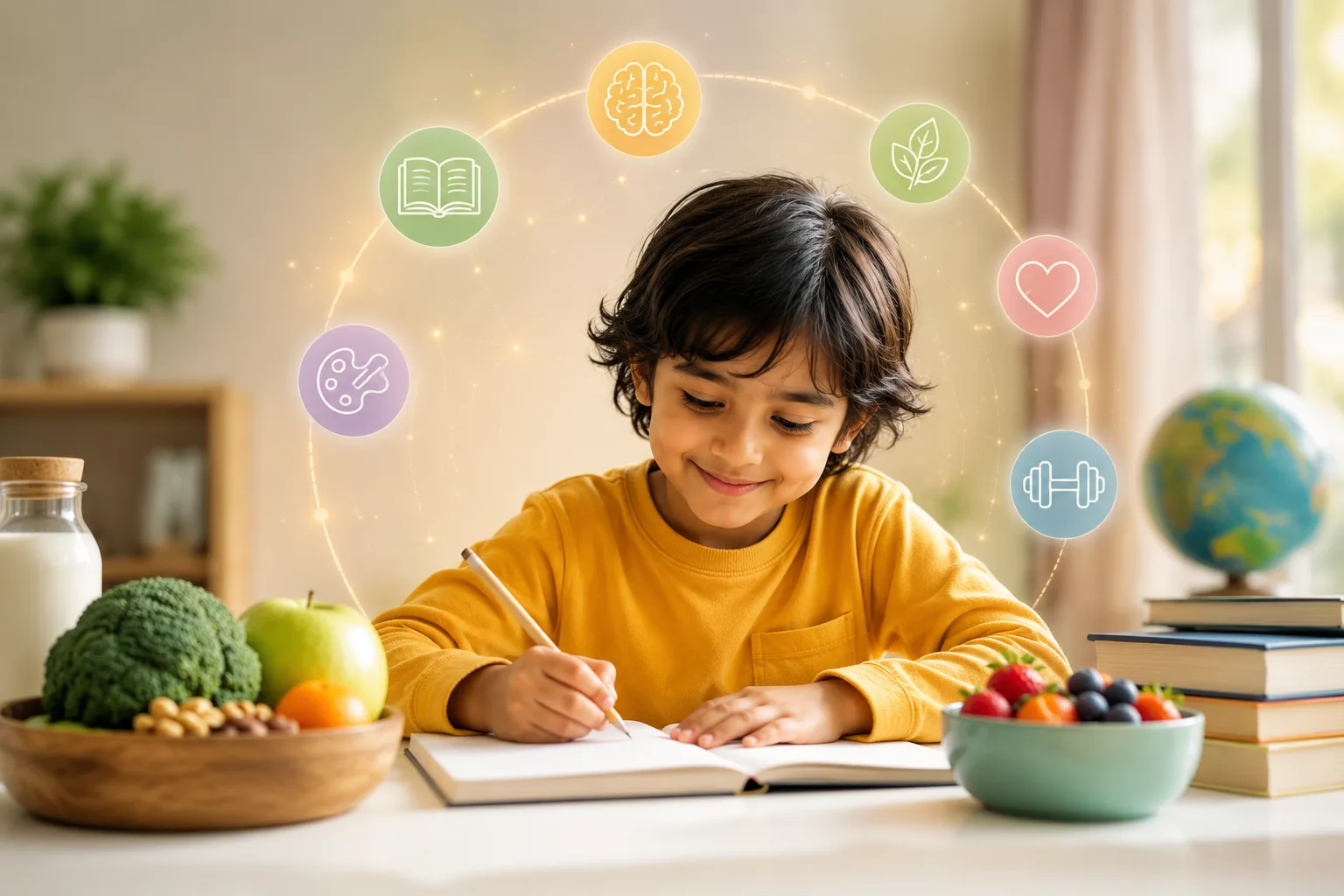
Walk into any traditional classroom, and you will see children sitting in neat rows, listening to the same lesson, opening the same textbooks at the same time, and eating similar snacks during recess. For generations, this standardized system has been the baseline of education and child rearing. It is efficient, organized, and familiar. But beneath the surface, a quiet challenge persists: children are not manufactured items on an assembly line. They are unique human beings with completely different biological blueprints, learning rhythms, and nutritional requirements.
When we treat all children as if they learn and grow in the exact same way, we miss the mark. Some children thrive in high-energy, collaborative environments, while others process information best in quiet, structured spaces. Some metabolize energy quickly and need specific nutritional balances to maintain focus, while others have entirely different dietary requirements to support their cognitive development. Recognizing this individuality is the first step toward transforming how we support the next generation.
The Hidden Limits of the “One-Size-Fits-All” Approach
Standardized education and generic nutritional guidelines were designed with convenience in mind, not individual optimization. In a typical classroom, a teacher faces twenty-five to thirty students, each with their own unique cognitive strengths and challenges. Trying to cater to everyone equally often means catering to the average, leaving advanced learners bored and struggling students overwhelmed.
Similarly, general nutritional guidelines tell us to ensure children eat their vegetables, get enough protein, and limit sugar. While this advice is generally sound, it ignores the biological specifics of how an individual child’s body processes fuel. Two children can eat the exact same meal, yet one may experience sustained mental clarity throughout the afternoon, while the other feels sluggish and distracted. Standard approaches cannot account for these subtle metabolic differences because they look at children as a collective group rather than individuals.
How Genetics, Nutrition, Environment, and Learning Intersect
To truly understand a child, we have to look at the big picture where biology meets daily life. A child’s development is shaped by a complex interplay of four major pillars:
Genetics
The foundational blueprint inherited from family, providing natural predispositions regarding how the brain processes information and how the body handles specific nutrients.
Nutrition
The daily fuel that directly impacts brain function, emotional regulation, energy levels, and overall physical growth.
Environment
The home atmosphere, classroom setting, peer interactions, and daily routines that influence emotional security and curiosity.
Learning Styles
The unique cognitive pathways through which a child absorbs, processes, and applies new concepts.
These elements do not operate in isolation. For instance, a child struggling to concentrate in math class might not simply be bored or unmotivated. Their difficulty could be linked to an underlying energy dip caused by mismatched dietary fuel, combined with a visual or auditory learning preference that isn’t being met by standard teaching methods. When we connect the dots between biology and daily habits, parenting and teaching stop feeling like guesswork.
The Future Belongs to Personalized Support
We live in an era where personalization has transformed almost every aspect of our lives. From customized healthcare plans to adaptive technology, we expect solutions tailored to our specific needs. Yet, child development has largely remained generalized. Bringing personalization to childhood growth is not about pushing children to perform beyond their capacity or labeling them with rigid categories; it is about removing invisible barriers so they can thrive naturally.
When parents and educators understand a child’s unique biological and cognitive tendencies, everyday decisions become much clearer. Meal planning transforms from a daily chore of guessing what is healthy into an intentional strategy to boost focus and vitality. Homework time shifts from a battle of wills into a supportive session aligned with how the child’s brain naturally processes information. Tailored support reduces stress for both the child and the adults guiding them, creating an environment of encouragement and confidence.
Embracing a Smarter Path Forward
Every child deserves an upbringing and education built around who they truly are, rather than a generic template designed for the average crowd. By embracing tools and insights that look closer at individual genomics, learning styles, and nutritional needs, we can unlock a future where no child gets left behind in the crowd.
This exact vision is what drives platforms like GenExcel. By bridging school genomics, personalized nutrition tracking, and tailored learning insights into a single, seamless ecosystem, GenExcel helps parents and educators decode what makes each child unique, transforming complex biological data into simple, actionable daily steps for a healthier, brighter future.
Published by GenExcel · Empowering parents and educators through personalized child development insights.
Give your child a journey built around who they are.
GenExcel brings learning, nutrition and health together in one app, with an optional genetic report on PRO.